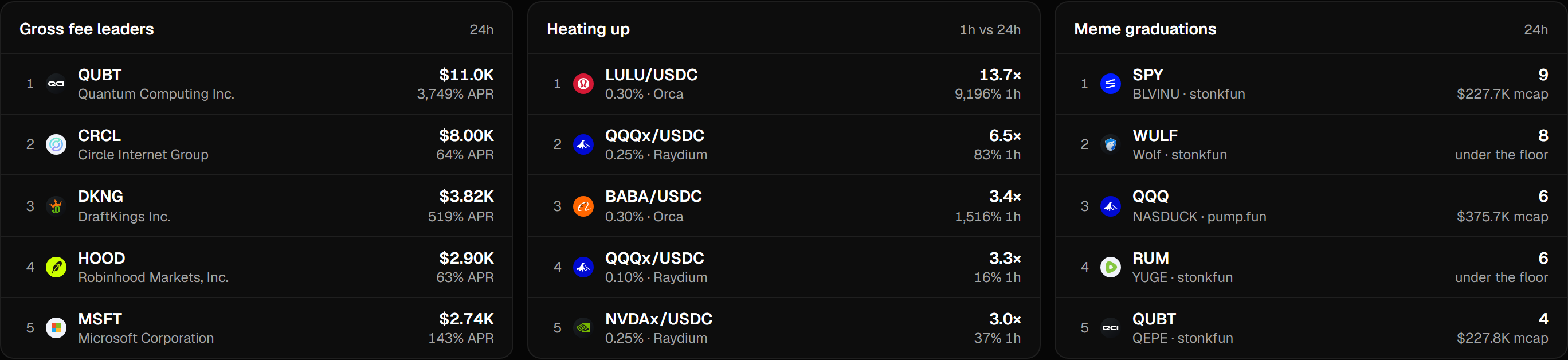
Every pool, ranked by what its fees actually paid. Volume derived from the pool's own fee counters.
rangebound solves for the volatility a pool's fees break even against, then prices it against the listed option that replicates the range. Every Raydium, Orca and Meteora pool in tokenised RWAs, read from the chain.
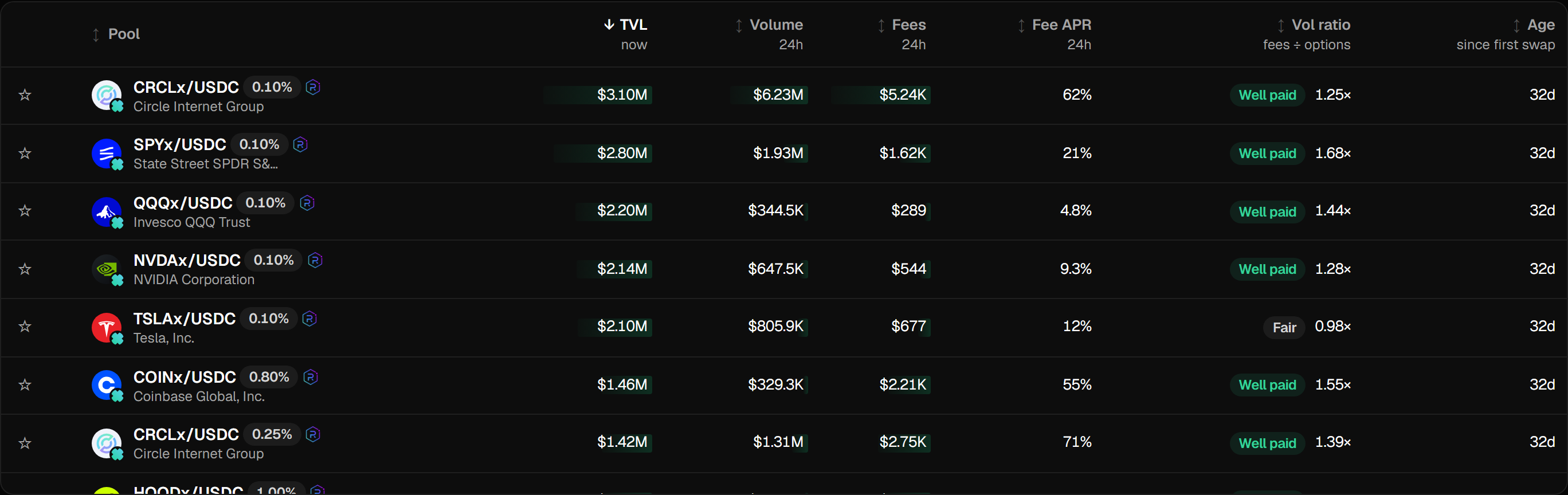
Every pool, ranked by what its fees actually paid. Volume derived from the pool's own fee counters.
A range held on the price is short gamma. We solve for the volatility the fees it has actually paid break even against, then divide by the implied vol of the gamma-matched listed option at the same tenor.
One multiple. Above 1.2× the pool pays better than writing the option.
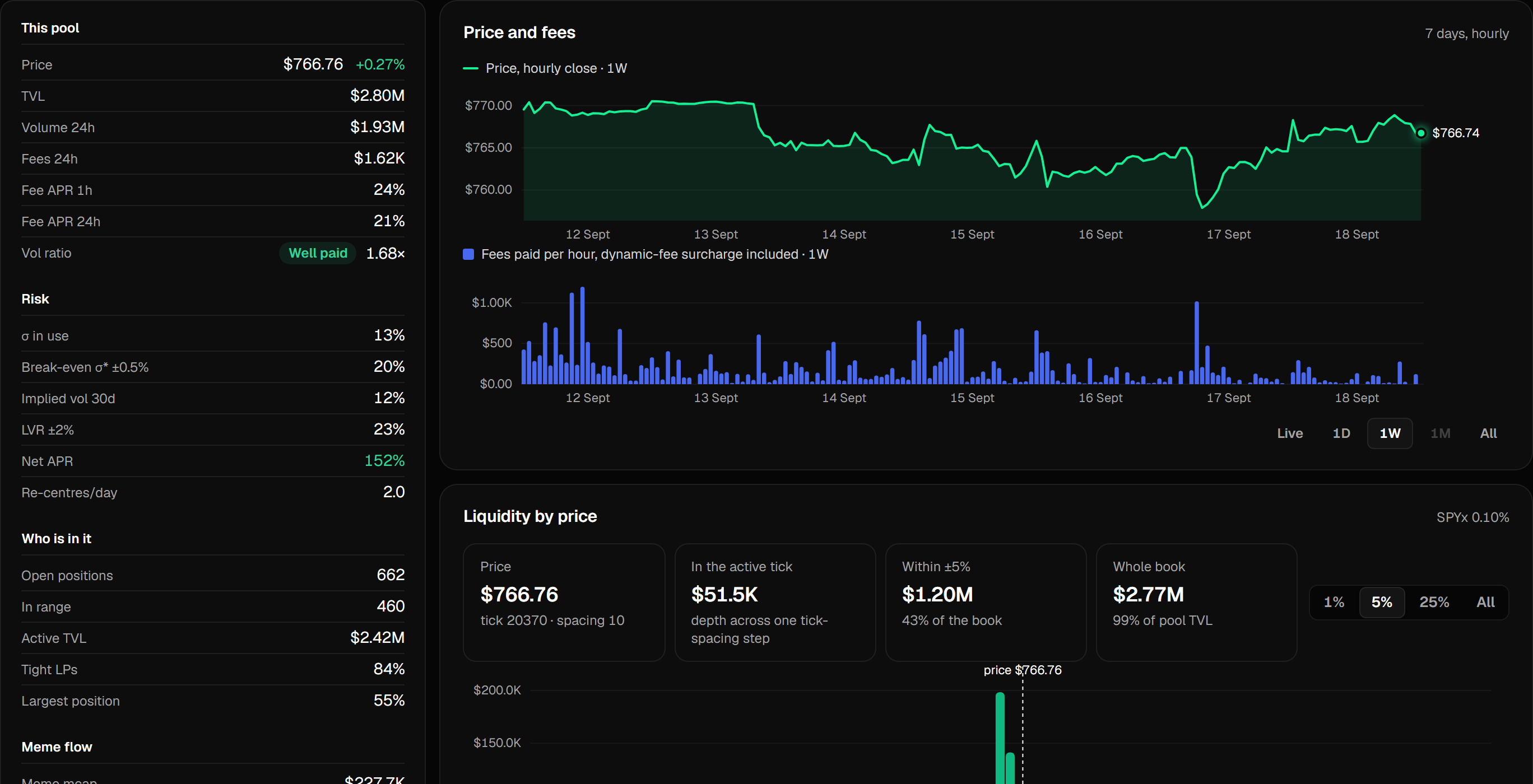
How it's calculated →Price, risk, who is in it and what is graduating against it, beside the hourly tape and the whole tick book, down to the depth in the active tick. Nothing behind a tab.
Deposits and withdrawals priced at the pool price of the block they landed in; fees split collected and uncollected. No indexer, no price feed. Filter by width to see whether tight or wide is winning.
Open positions →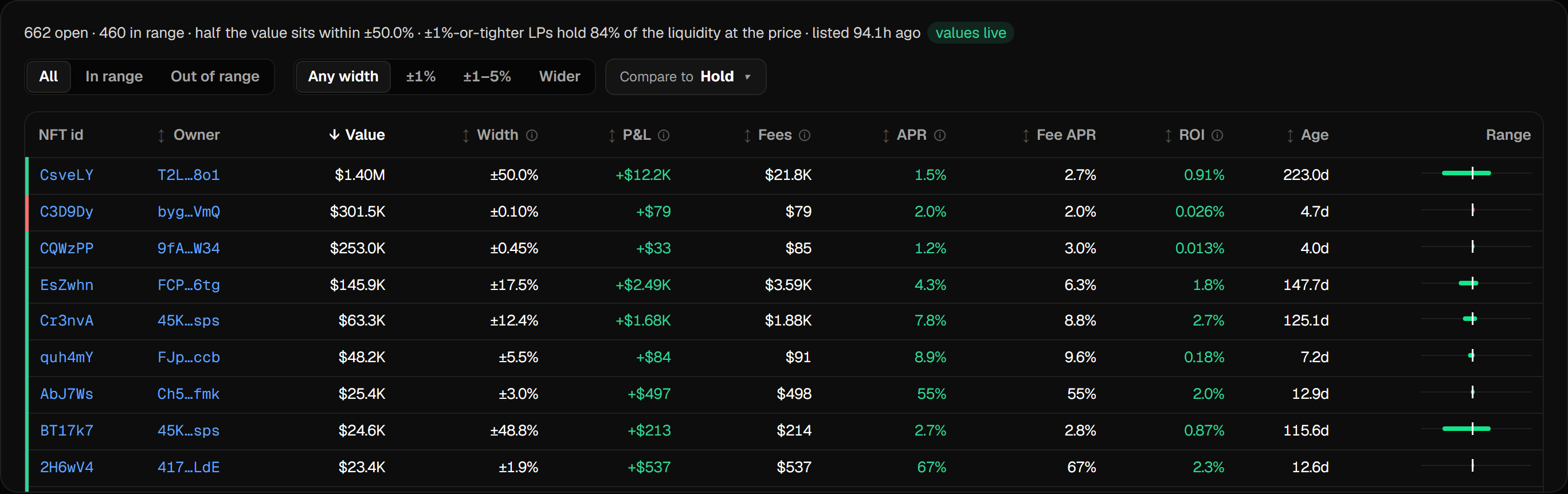
Every other page reads the chain on a schedule, and a schedule can only say what was true when it looked. This is fed by a subscription that takes each event as the chain emits it, so a position that opens, is added to and is closed inside one five-minute gap is invisible to a scan and whole here.
Trades and the LP actions around them, on one tape, about a second behind the block. Watch a wallet. Sort pools by net flow and the share of minutes they actually traded in — two figures a snapshot cannot produce at all.
Terminal →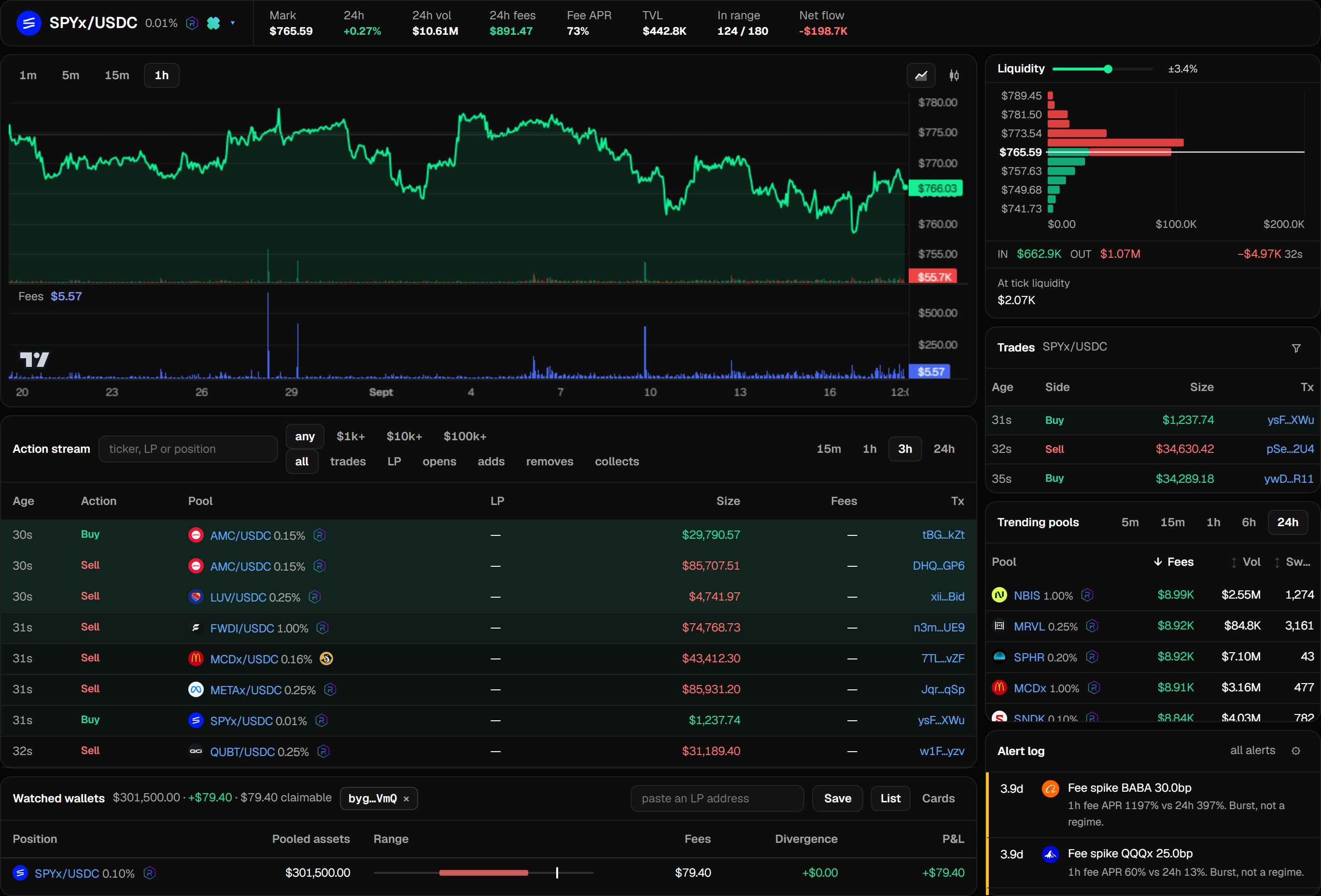
Sixty-three trades for every LP action — measured, not guessed. The tape carries both, so the rare, deliberate ones read against the flow they happen inside.
The tape replayed minute by minute, fees credited at the liquidity that was really in range at the time, then charged for LVR and re-centring. Move the width.
Launchpads pair memes against tokenised stocks, so the meme tape crosses the stock's pools. Graduations are picked up within minutes and screened for honeypots, then re-read on a five-minute loop.
How memes are counted →